This blog post deals with my observations and thoughts on my journey across the North Island, from Auckland to Wellington, and I provide some historical background to North Island environmental history.
After leaving the last urban areas of the Auckland bubble I was in, along New Zealand State Highway 1, I finally saw the rural part of Aotearoa. There it was, outside the bus window, as far as the eye could see and abundant throughout the landscape: the grass. The part that everyone talks about and associates with New Zealand. New Zealand, the land of sheep, dairy, and beautiful and lush, green landscapes. When people find out that I traveled to New Zealand, I immediately get questions whether I visited the Lord of the Rings filming locations. (I have not.) How beautiful the green hills are, people tell me. How Hobbiton is a place they wish they could visit. Let me reiterate again, the grass is literally everywhere. The landscapes are indeed beautiful, but they hide something the naked eye doesn’t see. It was not always like this. The path to grass was a long and painful road that caused irrevocable damage to the environment of New Zealand, propelled by imperial relations and the ideologies of the past that promoted “progress.” Knowing how it came to be helps us be more conscientious of our environment and have the will and determination to stop any further adverse environmental changes.
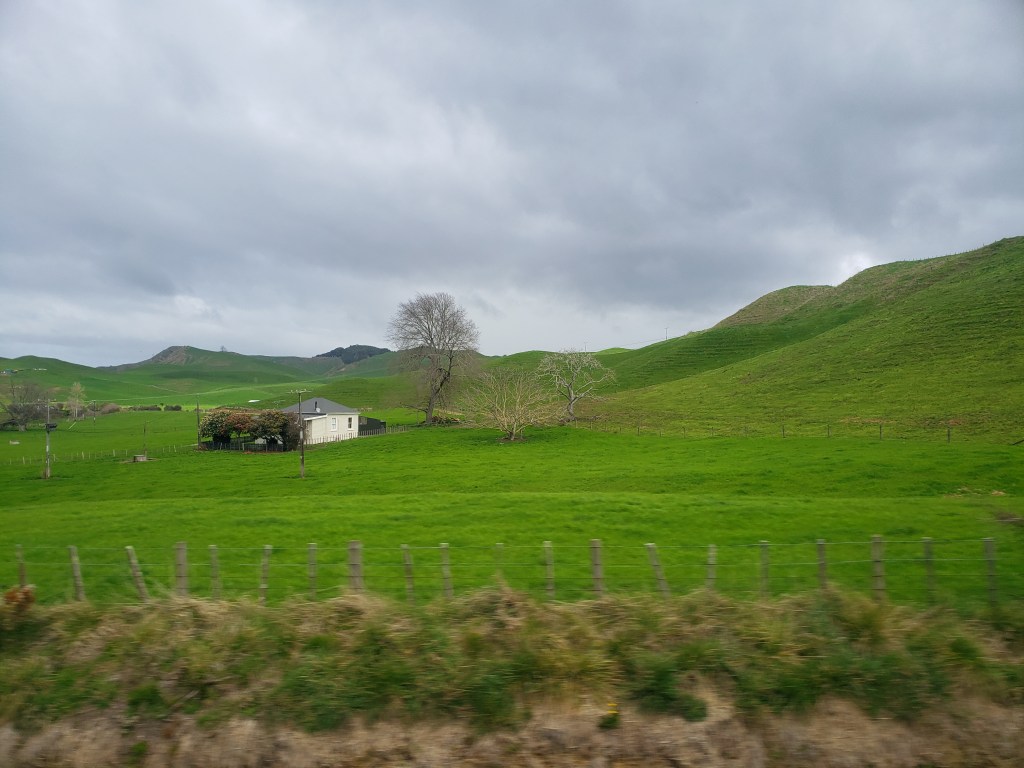
One of the reasons why I find New Zealand so fascinating is because of the manner in which transformations have taken place. The story of the Aotearoa landscape is one of the fastest and most extensive transformations in human history. It was the last major landmass that was settled by humans. About 800 years ago, New Zealand had not experienced any type of human contact. I think it’s incredibly remarkable that the flora and fauna that had existed for millions of years was still intact. It was a true time capsule of prehistoric treasures. Many of the birds never had mammal predators, so many of them became flightless, including the kiwi. As the first humans arrived, the transformation of the landscape and its animal inhabitants began. Mammals were brought in that decimated the fragile, native bird populations. Settlers in search of agricultural land and wood began to clear the forests and swamps were drained. The belief among the European settlers that arrived was that nature and the landscape needed to be tamed and civilized, in other words “improved.”
In my view, one of the most important events in human history was the Industrial Revolution. With the advent of the Industrial Revolution, the modern world as we know it was born. What I find really interesting is the fact that as settlers were coming to New Zealand, the Industrial Revolution had just hit its peak. British settlers brought with them certain ideas of progress that other European settlers around the world did not have in prior centuries. The belief that the landscape needed to be controlled took hold and what followed was one of the quickest landscape transformations in human history.
The Industrial Revolution increased output in manufacturing and the building of factories. However, New Zealand is not known as a manufacturing land. The land was cleared to make space for agriculture and other raw materials from nature, like wood, that would go to Britain to be manufactured. New Zealand was part of the British imperial realm which meant that the sea of grass and other industries from the land that I saw on my trip was a remnant of that past era. This is very important to point out because it sets the economic course of history of the country. New Zealand would have an economic agricultural outlook for years to come.
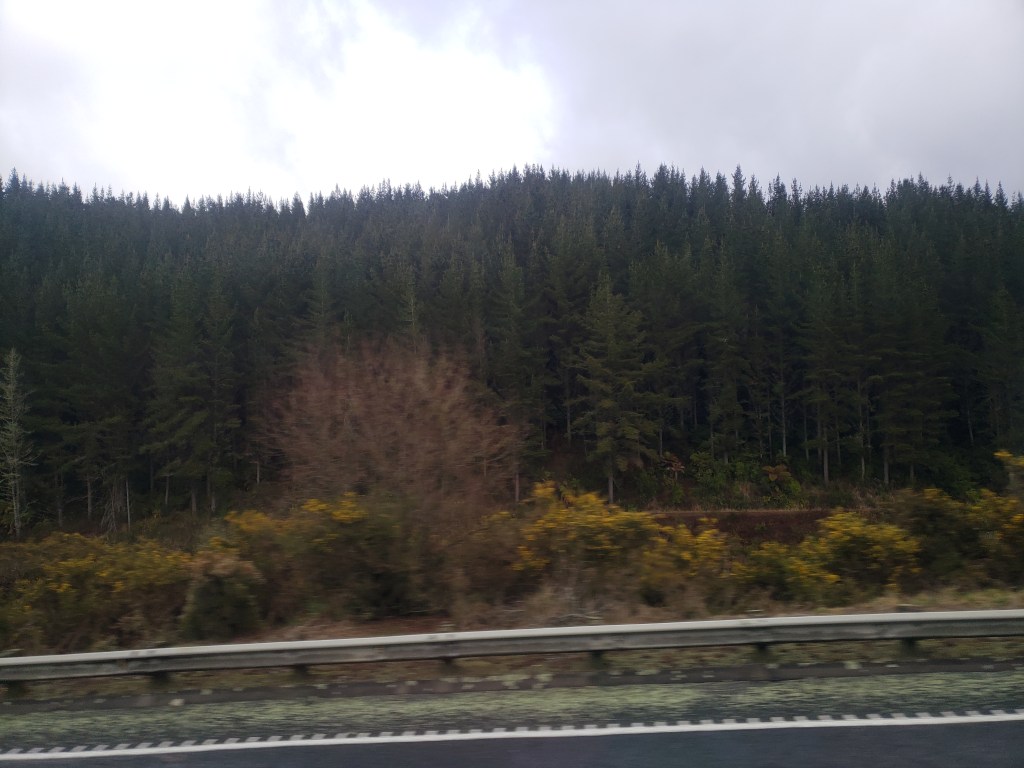
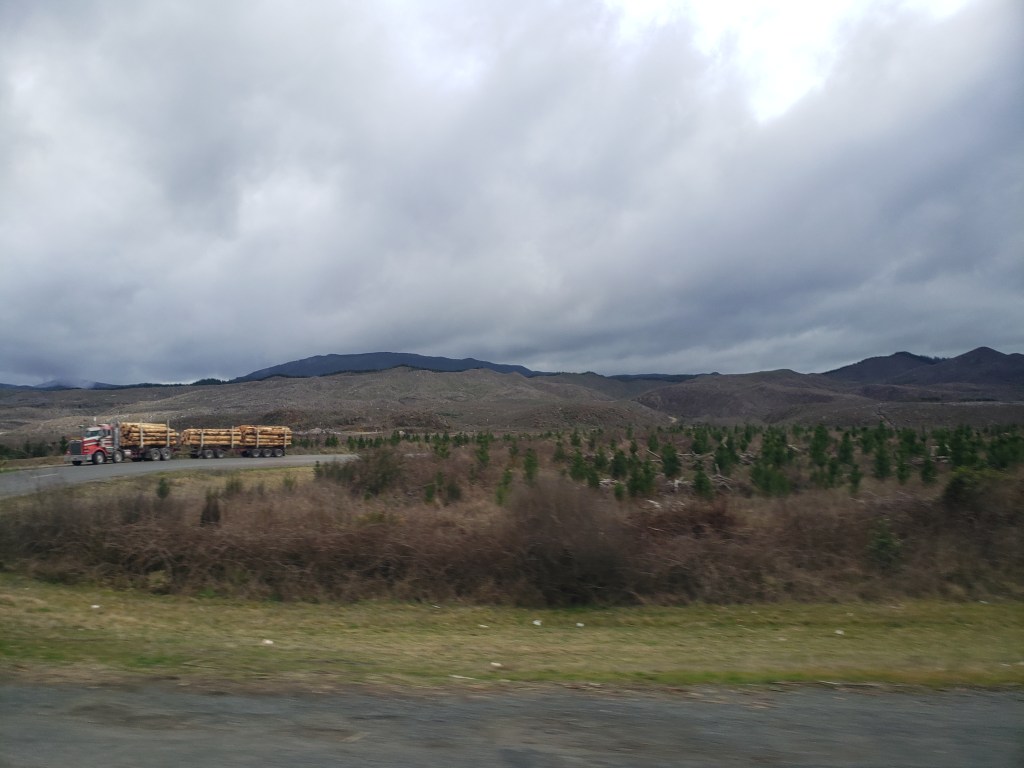
As I rode through the North Island, I was able to observe another change in the landscape. After several miles deep into the island, the grass turned to forest. What appeared to be beautiful forests were in fact plantation forests filled with pinus radiata, a species of pine, native to California. Large trucks with bare tree trunks passed by every now and then. I saw hills where one half was forested and the other half was bare. Some areas had very small, baby trees planted. Just like the grass, the forests were non-native and their purpose was to generate income from the land.

As I arrived in Wellington, I had a better understanding of the Aotearoa landscape. I reflected on what I saw and thought about how historical and economic dynamics influenced it. I’ve read about it extensively, but nothing compares to experiencing it in person on a ten hour bus ride.

 Dreaming of Koru
Leave a comment