This blog post deals with my experience in the Bay of Islands and my thoughts on the Treaty of Waitangi.
As one walks in the Bay of Islands, the scenery captivates the senses. Paihia is a charming little town with quaint, little shops and restaurants. My experience there was very pleasant and enjoyable. Across the bay, I was able to see islands and coastlines on the horizon. There are ferries that traverse the bay and take visitors across the water to Russell (Kororāreka). Russell is an absolutely calm and pretty, little town. It’s rich in historical significance and, as a lover of history, I was quite excited to be there. Once known as Kororāreka, it’s of major historical significance for New Zealand. It’s hard to imagine that at one time Russell was known as the “Hell Hole of the Pacific.” As more Europeans made their presence known in New Zealand and the South Pacific, Russell came to be the major port where sailors and other travelers would anchor and let loose after months of sailing across the oceans.

On the other side of the Bay is Waitangi. This is the site where 185 years ago the Treaty of Waitangi (Te Tiriti o Waitangi) was signed. In terms of its historical significance, this place is the most prominent in New Zealand history. What happened here in 1840 has had significant reverberations throughout the history of the country. Te Tiriti, as it’s also known, continues to be debated on its influence in New Zealand life.
In the last couple of months I’ve attempted to understand Te Tiriti and immerse myself in its history and significance for New Zealand today. Last November, I watched in the news with curiosity as the Hīkoi protests made their way across the North Island to Wellington to protest the Treaty Principles Bill, a bill introduced by the right-wing coalition government that would redefine the principles of Te Tiriti. With the help of books and a very spectacular trip to Waitangi, I’ve gained a better understanding and appreciation of the history of Te Tiriti and the Māori struggle for the recognition of their rights.
The more I study Te Tiriti, the more I’m aware of how complicated it is to understand its meaning, different interpretations today, and the intentions of the figures who played a part in its drafting and promotion. Te Tiriti was a product of the ideologies of its time, but also of the fears felt by those who signed and considered it. The influence of the missionaries and their view of how indigenous people should be treated was one of the most influential factors in the emergence of Te Tiriti. They encouraged Māori to sign the treaty for their own good because they saw the danger other Europeans posed, both lawless individuals and settler groups hungry for land. I find this and the different views historians have produced very fascinating. (Historian Ruth Ross claims that Henry Williams and the missionaries were not so benevolent as they seemed and that they had deliberately mistranslated the Te Tiriti.) Furthermore, British concerns that France would claim New Zealand before them pushed them to create Te Tiriti to make New Zealand a British colony. The drafting and translation of Te Tiriti took place in a few days, so many misunderstandings and translation issues abound to this day.
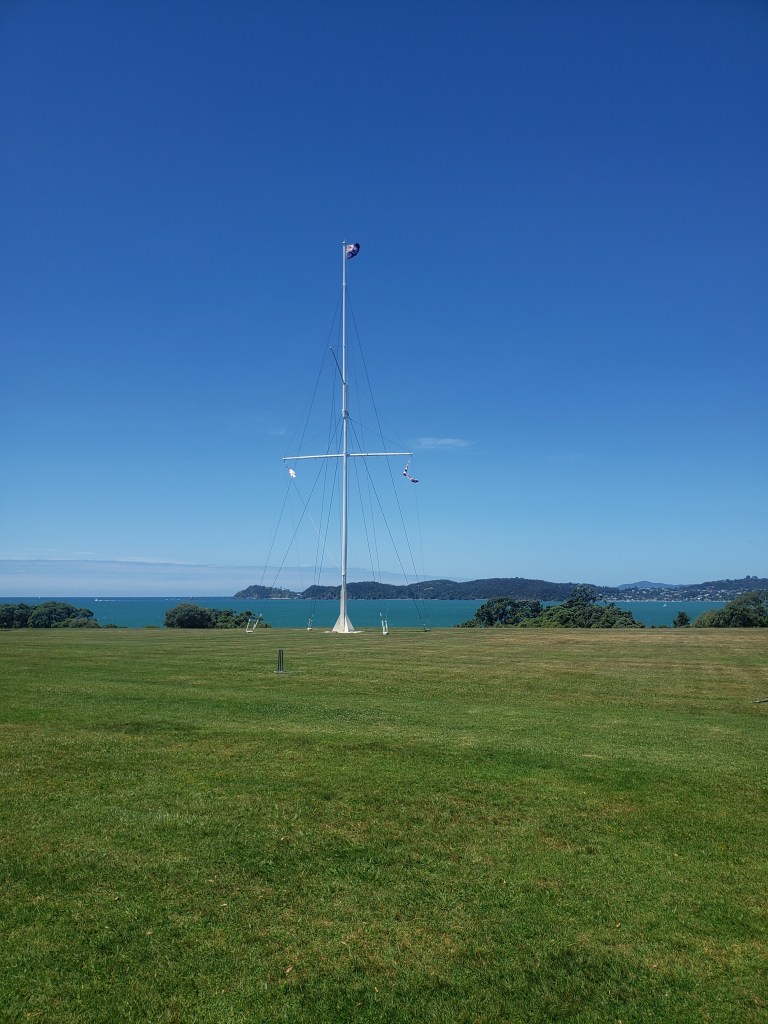
At Waitangi, I saw James Busby’s house and the famous lawn where all the chiefs gathered on February 6, 1840 to discuss and sign Te Tiriti. As the sun brightly shone and the wind blew, I imagined how all those gathered on that day might have experienced the scenery. It must have been quite the sight as numerous wakas landed ashore and the chiefs gathered on the lawn. I imagined how Lieutenant Governor William Hobson, British Resident James Busby, and the missionary Henry Williams went about making preparations for the event. As a lover of history, I absorb the facts from books and let the scenery fill me with awe and wonder for the lives that went before us.









 Dreaming of Koru